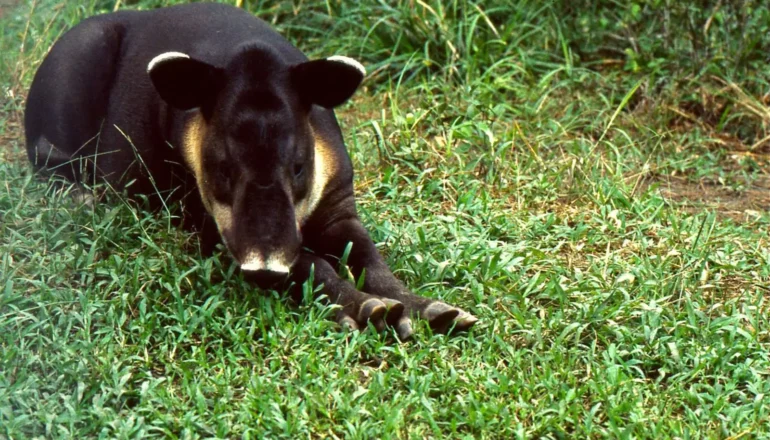
High in the Colombian Andes, where the mist constantly embraces the ancient trees and the crisp air preserves a fragile ecosystem, dwells a silent giant. Elusive, prehistoric in appearance, and absolutely fundamental to the survival of our high-altitude forests: meet the Mountain Tapir (Tapirus pinchaque).
For us at Ecoturismo Colombia, spotting a tapir in its natural habitat is not just a stroke of luck; it is a profound privilege. It’s a rare opportunity to witness the perfect balance of untouched nature in motion.
Why the mountain tapir is called the “Architect of the Forest”?
The Mountain Tapir doesn’t build nests or dig complex burrows, yet its impact on the Andean landscape is monumental:
- The Great Seed Disperser: As insatiable herbivores, they consume vast quantities of endemic fruits and plants. As they roam across vast territories, they disperse seeds through their droppings, literally planting the cloud forests of the future.
- Trail Blazers: With their robust, barrel-like bodies, they carve natural pathways through the dense vegetation of the páramo (moorland) and high Andean forests. These tapir-made trails are later used by smaller, more vulnerable species.
A Fleeting Encounter in the Mist
To see a Mountain Tapir is a reward reserved for the patient traveler. They are incredibly shy and prefer the quiet hours of dawn and dusk.
- Where do they live? They roam between 2,000 and 4,000 meters (6,500 to 13,000 feet) above sea level, primarily in the páramo and cloud forests of the Central and Eastern Cordilleras (such as Los Nevados or Puracé National Parks).
- Unique Features: They sport a thick, woolly dark coat to survive the freezing nights, and a distinct, flexible snout (like a miniature trunk) used to selectively pluck leaves.
Ethical Wildlife Tourism: Observation Without Alteration
The Mountain Tapir is classified as an Endangered species. Deforestation and agricultural expansion constantly threaten their shrinking habitat.
How does your visit help? Properly managed ecotourism transforms local farmers into dedicated guardians. When communities realize that a respectful traveler values a living tapir far more than cleared land, the paradigm shifts entirely.
- 🤫 Absolute Silence: If you join a tracking expedition, silence is your greatest tool.
- 🚫 Never Feed Wildlife: Wild animals must maintain their natural foraging instincts.
- 📸 Keep a Respectful Distance: Bring your binoculars and telephoto lenses. Never attempt to approach, startle, or corner the animal.
💬 Your Voice Matters
Protecting the tapir means protecting the high-altitude water sources (páramos) that sustain millions. Have you ever tracked wildlife in its natural habitat? What was your most breathtaking encounter? Share your story with us in the comments! 👇