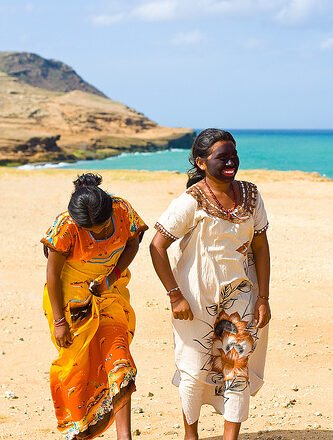
When foreigners picture La Guajira, the image is often the dramatic contrast of the golden desert meeting the deep blue of the Caribbean Sea. But the true heart of this harsh, beautiful territory is not its landscape; it is its people: the Colombia’s Wayúu Culture.
At Ecoturismo Colombia, we invite you to look beyond the colorful handicrafts sold on the beaches. We want you to understand the profound history you carry when you wear a traditional mochila bag.
Understanding the Colombia’s Wayúu Culture
The Wayúu are the largest indigenous group in Colombia and Venezuela. They consider themselves the descendants of Araliet (truth) and the children of Mma (the Earth) and Juya (the Rain).
3 Fascinating Insights of the Colombia’s Wayúu Culture:
- Weaving is Thinking: For a Wayúu woman, weaving is not merely manual labor; it is a way to physically manifest her thoughts and the cosmology of her people. The Kanasü (geometric patterns) on each bag tell a story—often depicting animal tracks or constellations.
- A Matriarchal Society: Women are the central pillars of the community. Lineage, inheritance, and moral authority are passed down through the mother’s side of the family.
- The Power of Dreams: For the Colombia’s Wayúu culture, the dream world is as real as the waking one. Through dreams, they receive guidance, warnings, and messages from their ancestors.
The Experience of Visiting a “Ranchería”
Tourism in La Guajira has matured. Today, it is possible to visit a Ranchería (a traditional settlement) to experience a genuine cultural exchange with the Colombia’s Wayúu culture, rather than a staged show.
What to Expect During Your Visit:
- The Yonna Dance: Far from just a performance, the Yonna is a ritual dance of social balance and celebration, where the woman respectfully challenges the man to the hypnotic beat of the drum.
- Ancestral Flavors: Taste friche (goat meat), prepared using centuries-old techniques.
- The Word of the Elders: Sit under the enramada (a traditional open-air shelter) and listen to the Pütchipü’ü (the palabreros, or “word-bearers”) speak about their unique system of conflict resolution, recognized by UNESCO as Intangible Cultural Heritage.
Travel with Deep Respect
If you choose to enter this ancestral territory, doing so with mindfulness is crucial:
- Always Ask Permission: Especially before photographing people’s faces or sacred spaces.
- Buy Directly from the Artisan: Excessive haggling devalues hours, sometimes weeks, of manual and spiritual work. Pay a fair price.
- Water is Life: In the desert, water is scarce and sacred. Use it with extreme consciousness.
💬 Join the Conversation
Colombia is a tapestry of ancient cultures. If you could learn one traditional skill directly from an indigenous community, what would it be?
- Wayúu Weaving (Textiles) 🧶
- Ráquira Pottery (Ceramics) 🏺
- Zenú Goldsmithing (Jewelry) ✨
Cast your vote in the comments and tell us why! 👇