There are very few dishes in Colombia capable of gathering as many people around a table as the Lechona Tolimense. Whether at a rural wedding, on New Year’s Eve, or during the vibrant San Juan festivals, this golden, crispy delicacy is the absolute synonym for celebration.
At Ecoturismo Colombia, we invite you to taste the history of a dish that represents the pure cultural blending of the “Tolima Grande” region.
Pork: A European Traveler in Andean Lands
The history of the lechona begins with colonization. Europeans introduced pigs to the Americas, and in the fertile valleys of the Magdalena River, this animal became the staple protein for peasants. Quickly, Spanish roasting techniques (like the cochinillo) blended with the spices and ingredients of the Andean land, creating a culinary masterpiece.
The Secret of the Authentic Recipe of Lechona Tolimense (Zero Rice!)
Here lies a fierce debate that divides the country, but in Tolima, the rule is strict: authentic lechona contains no rice. Stuffing it with rice is a modern adaptation from other regions (like Bogotá) to make the dish cheaper.
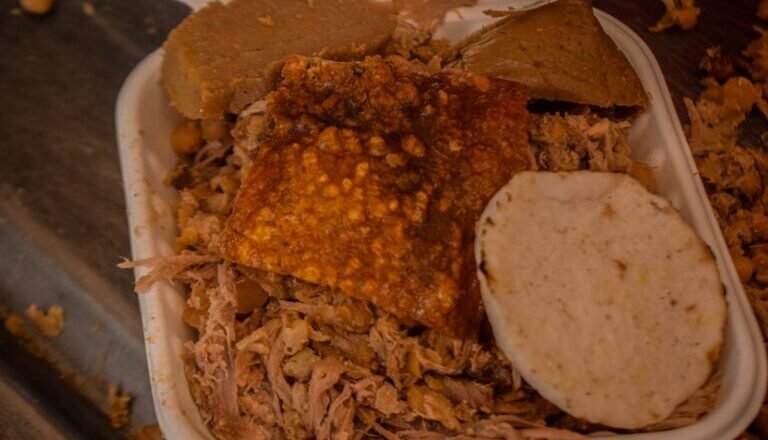
- The Perfect Stuffing: A whole pig is carefully deboned to keep the skin intact. It is then stuffed with the animal’s own meat, heavily marinated in scallions, garlic, and spices, mixed purely with dried yellow peas.
- Slow Food Roasting: The magic happens inside a traditional clay oven fueled by wood. The lechona is slow-roasted for 10 to 12 hours. This allows the fat to melt, the meat to become exquisitely tender, and the skin to achieve an unforgettable, glass-like crispiness.
How is the ‘lechona tolimense’ served?
In its place of origin, a good plate of lechona is served with only two traditional sides designed to cut through the rich fat: a thin white corn arepa, or an “insulso”—a slightly sweet, gelatinous dough made of corn or wheat, cooked wrapped in banana leaves.
Frequently Asked Questions (FAQ)
- Where can I eat the best lechona in Colombia? Towns like El Espinal (Tolima) or the city of Ibagué are nationally famous for their traditional lechonerías.
- Why is the pig’s head displayed on top? It is an aesthetic tradition to prove to the buyer that the product is an authentic, whole roasted pig.
- What drink pairs well with it? Traditionally, it is paired with cold oatmeal drink (avena) or fermented corn chicha to perfectly balance the savory flavors.
💬 The National Debate: How do you prefer yours? Are you a purist for the original Tolima recipe with peas, or do you enjoy the rice-filled versions? Let us know!