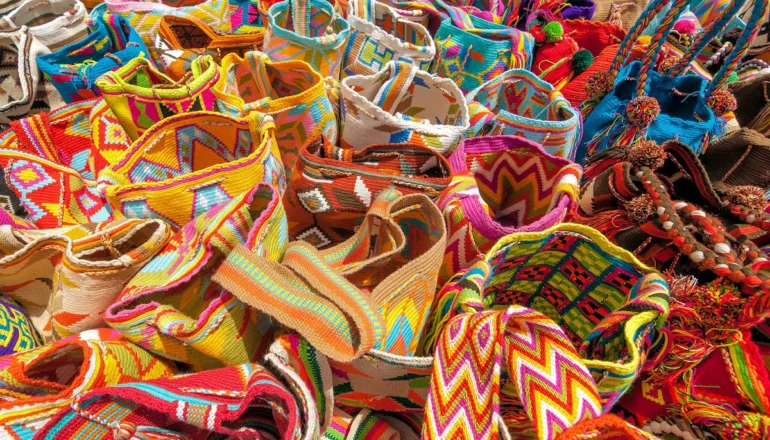
If you have traveled through Colombia, it is almost certain you have seen (or purchased) a brightly colored, intricately woven bag featuring geometric patterns. These are the famous Wayúu Bags.
But at Ecoturismo Colombia, we want you to know that the next time you sling one over your shoulder, you aren’t just carrying a fashion accessory; you are carrying a piece of the soul of the La Guajira desert.
The Myth of Wale’kerü
According to Wayúu mythology, the art of weaving was not invented by humans. It was taught by Wale’kerü (the mythical spider). She taught the Wayúu women how to interlace threads to tell their stories. Because of this, weaving is an almost exclusively female practice, considered an act of deep meditation and ancestral wisdom.
What is the Kanasü?
The Kanasü is the very essence of the design. These are the complex geometric figures that adorn the bags and the traditional hammocks (chinchorros). They are not random drawings; they are a visual language:
- They represent Wayúu cosmology, the winding paths of the desert, the constellations, the tracks of local animals (like the fox or the snake), and elements of daily life.
- Every bag is entirely unique. It reflects the mood, the dreams, and the soul of the specific artisan who created it—a process that can take between 20 to 30 days to complete.
Fair Trade: Do Not Haggle
When you travel to La Guajira or buy an authentic craft, pay the fair price. Haggling devalues weeks of intense manual and spiritual labor. Buying directly from the artisan is the ultimate way to honor and help preserve this millennia-old culture.
💬 Your Bag Tells a Story: Do you own an authentic Wayúu bag? Look closely at its geometric figures. What story do you think the weaver was trying to tell? Share your thoughts! 🧶☀️