Deep in the heart of the Colombian Massif, right where the majestic Andes mountain range begins to split and the country’s most vital rivers are born, hides one of the greatest enigmas of pre-Columbian America: The San Agustín Archaeological Park, located in the Huila department.
At Ecoturismo Colombia, we know this site is far more than a tourist destination; it is a portal through time. Declared a UNESCO World Heritage Site in 1995, this stone sanctuary is the living testament of a complex civilization that mysteriously vanished centuries before the arrival of the Spanish.
The River of Tombs and the Sacred Mountain
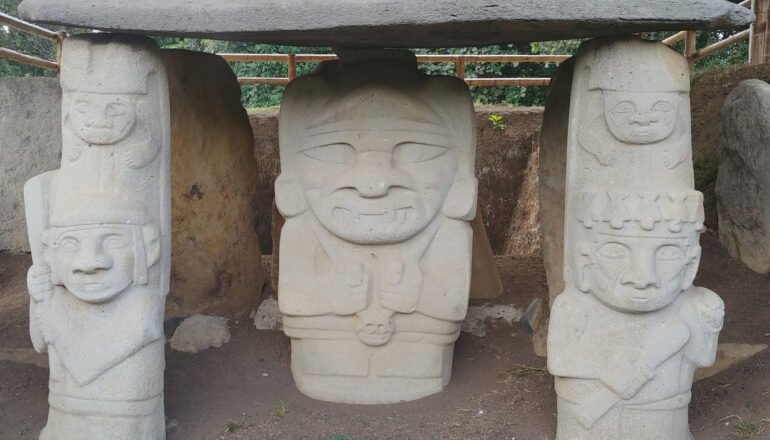
Over 2,000 years ago, an advanced society chose these fertile mountains to build their ceremonial center. On both sides of the Magdalena River—which the ancient inhabitants called the Guaca-Hayo (the river of tombs)—they erected enormous earthen mounds covered by stone funerary dolmens.
But what truly takes visitors’ breath away are the sculptures. Hundreds of monolithic statues (carved from a single piece of volcanic rock), some standing up to 7 meters (23 feet) tall, stand guard over the landscape.
What do the San Agustín statues represent?
Archaeological studies suggest these figures were not mere decorations, but profound representations of life, death, and mythology:
- The Spirit World: The statues mark the spiritual connection between the world of the living, the celestial realm (represented by birds of prey like eagles), and the underworld (represented by snakes).
- Feline Features: Many human figures display large jaguar fangs, a universal ancient symbol of power, shamanism, and the ability to transform spiritually and physically.
- Golden Proportions: Through curved lines, spirals, and stepped traces, the ancient sculptors demonstrated an enviable technical mastery.
Mystical Tourism and Nature
Visiting San Agustín isn’t just about walking among ruins. It involves trekking through trails framed by wild orchids, breathtaking waterfalls (like the Salto de Bordones), and the Estrecho del Magdalena, a gorge where Colombia’s largest river is squeezed into a narrow rocky channel only 2.2 meters wide.
Frequently Asked Questions (FAQ)
- When is the best time to visit San Agustín? While it can be visited year-round, the dry seasons (June-August and December-February) are ideal for hiking.
- How much time do you need at the park? We recommend at least 2 full days to properly explore the main park, the Alto de los Ídolos site, and the Magdalena River gorge.
- Are there local guides available? Yes! Hiring a certified local guide is highly recommended to fully grasp the rich, complex symbolism behind the statues.
💬 Tell us: Would you feel the mystical energy of walking through a sacred cemetery that is over two millennia old? Leave us a comment!