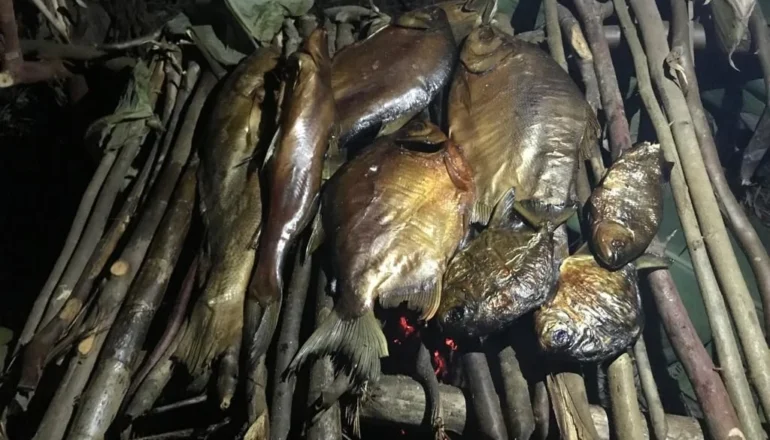
Today, Ecoturismo Colombia wants to whet your appetite with one of the most fascinating culinary techniques of the indigenous communities: the Pescado Moqueado (Smoked Fish).
To truly understand an ancient culture, you must sit at their table. In the vastness of the Colombian Amazon and the Eastern Plains (Orinoquía), cooking is not merely about sustenance; it is a ritual of survival, a profound display of respect for the river, and a compendium of millennia-old wisdom.
What is the “Moqueo” Technique?
Long before electricity and modern refrigeration existed, indigenous communities (such as the Tikuna in the Amazon or the Sikuani in the plains) needed a way to preserve the vital protein provided by the river in an extremely hot and humid climate. Thus, the moqueo was born.
- The Process: A large river fish (like the massive Pirarucú or Catfish) is cleaned, seasoned with salt and wild chili, and wrapped tightly in large, fresh banana or bijao leaves.
- The Fire: The wrapped fish is placed on an elevated, rustic wooden rack (called a barbacoa), situated nearly a meter above the hot embers.
- Patience and Time: The fish is not cooked with a direct, roaring flame. Instead, it is slowly smoked and dehydrated over hours—sometimes days—using specific aromatic woods that not only preserve the meat but impart a deeply earthy, unmistakable flavor.
An Experience Beyond the Palate
Tasting pescado moqueado inside a traditional indigenous community connects you directly to the earth. When you unwrap the banana leaf, the rich aroma of the jungle and woodsmoke fills the air. It is typically served with casabe (a crispy cassava flatbread), fariña, or roasted plantains. It is the absolute definition of “Slow Food,” where time and deep respect for the ingredients are paramount.
Frequently Asked Questions (FAQ)
- Where can I try pescado moqueado? If you travel to cities like Leticia (Amazonas) or the remote departments of Guainía and Vichada, many traditional restaurants and eco-tourism lodges prepare it authentically.
- Can other meats be smoked this way? Yes, indigenous hunters also apply the moqueo technique to wild game meats to preserve them during long expeditions in the jungle.
- Is it spicy? It depends on the region! In the Amazon, it is often accompanied by tucupí (a dark, fermented cassava and wild chili sauce) that gives it a spectacular, fiery kick.
💬 Tell us your tastes: Local gastronomy is the best way to travel. What is the most traditional cooking technique or exotic dish you have ever tried on a trip? We want to read about it!